Wednesday, 19 August 2009

Ryanair pull out of Manchester


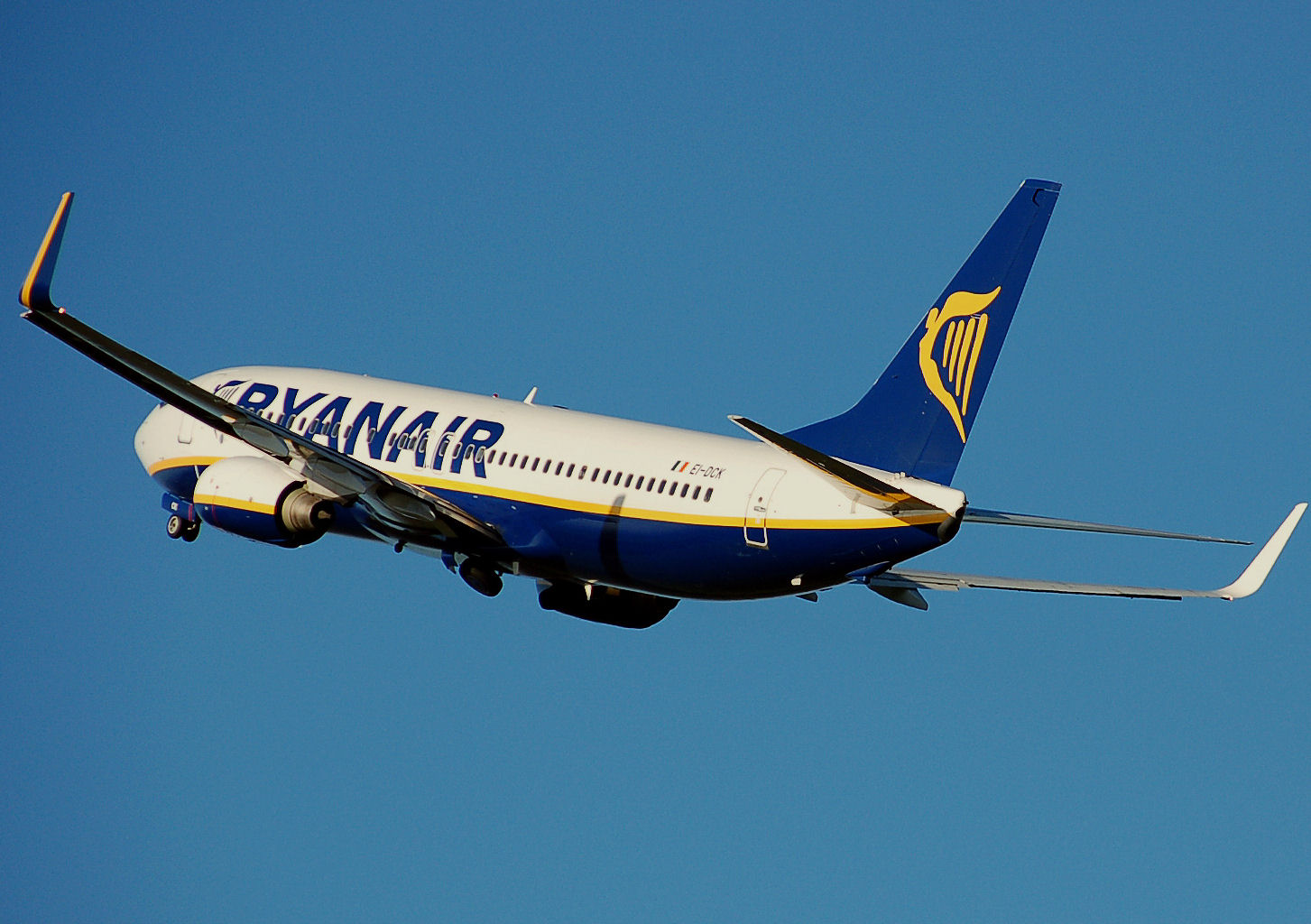
Well, Ryanair are in the news again. No sooner is it reported on this blog that they are expanding at Leeds Bradford with the possibility of 1,000 new jobs for the Leeds area, than they pull out of Manchester with a loss of, yes, you’ve guessed it, 1,000 jobs. Leeds gains, Manchester loses.

It seems as though it’s all blown up about landing charges. Manchester has refused to lower the charges it makes to airlines landing at the airport, causing Ryanair to almost pull out of Manchester completely. It is expected that 600 jobs will go directly because of this withdrawal, and a further 400 jobs will now not be created that would have come into being under a deal that Ryanair offered Manchester if it cut charges.

However Manchester Airport has defended its charges saying: "Notwithstanding all of our investment in Manchester airport, including during the current recession, we don't believe that charges as low as £3 per passenger are unreasonable. Clearly, Ryanair do and that's regrettable."

Ryanair will be closing or switching nine of its ten routes at Manchester, and this will take place from the start of October. This will mean a total of 44 weekly flights cut at Manchester, which will mean a loss of some 600,000 passengers a year.

As well as having more routes from Leeds Bradford, Ryanair will be boosting its winter schedules from Edinburgh and Prestwick, with a Ryanair spokesman saying: "We are looking to have more winter routes from Edinburgh and Prestwick than last year.

"We are looking at finalising the schedules for those two airport bases for us, and hope to have them pretty much agreed by the end of this week."

Last winter the airline had 19 routes going out of Edinburgh, and about another twenty out of Prestwick.

Sunday, 16 August 2009

Ryanair to expand at a revamped Leeds Bradford Airport


Budget airline Ryanair has chosen Leeds Bradford International Airport as a new base for its flights, a move which Ryanair claim is going to create 1,000 new jobs for the area. Ryanair already has three routes from Leeds Bradford, to Alicante, Girona and Dublin, but an impressive 14 more are to be added covering Carcassonne, Faro, Ibiza, Knock, Krakow, Limoges, Malaga, Malta, Montpellier, Murcia, Nantes, Palma, Pisa and Venice. It is hoped that the new flights will be launched in March 2010, making Leeds Bradford the 34th base for Ryanair.

This announcement follows in the wake of the airport getting planning permission to redevelop its relatively small and simple terminal building, and also to develop the road access to the airport. This plan, backed by the private equity owners Bridgepoint, is hoped to provide top class amenities and boost the status of the airport as the main gateway to Yorkshire.

The project will include a new two-storey extension with new check-in and security facilities, a new departure lounge, and retail area with shops, bars and cafes. The passenger security screening zone will be extended and the domestic baggage reclaim hall will be revamped.

It has been noted that the increased number of flights will make France more accessible from Yorkshire, and this may well be of interest to those looking to buy second homes in rural France.
Ryanair’s expansion at Leeds Bradford will no doubt be interesting news to rival carrier Jet2 which has its headquarters at the airport, especially as Jet2 is already serving nine of the new routes proposed by Ryanair. Jet2 currently flies 36 routes out of Leeds Bradford.

Ryanair plans to put about £84 million of investment into the airport.

Sunday, 9 August 2009

Concorde come back - will we ever see the return of supersonic passenger flight?


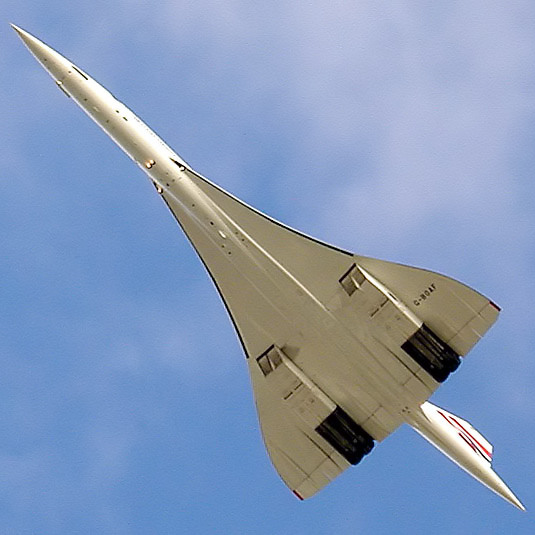
One thing that many frequent fliers often ponder is whether supersonic passenger flight, as exemplified by Concorde, will ever come back.

Concorde allowed people to travel from London to New York at twice the speed of sound, taking just over three hours. This meant less jet lag, and made it quite realistic for people to have weekends away across the Pond, if they happened to have the £5,000 airfare to spare.

Despite its expensive price tag, and some controversy over its sonic boom, Concorde put in over three decades of commercial flights. But then the crash of 2000, along with the high price tag, meant a decline in demand for Concorde flights. The last flight was from New York to Heathrow in 2003 with a hundred celebs on board, and crowds of onlookers at the airports.

With a conventional jet the journey across the Atlantic is at least twice as long, and there is simply nothing in the present day that compares with Concorde. So ever since the last commercial flight of Concorde, talks of a revival have never ceased, but this again raises the question of the sonic boom. The sound made as Concorde broke the sound barrier caused the United States to ban cross-continental flights of the airliner, although rumours abounded in Europe that this was sour grapes because they hadn’t invented the plane themselves. It seems that there is new technology afoot that may actually reduce the volume of the boom, but this apparently uses ten per cent more fuel, which is not going to go down well in these green conscious times.

Considering the problems that airlines are having at the moment to simply stay afloat, it doesn’t look like Concorde will be returning in a hurry. However it is on the cards that supersonic and speedy travel will inevitably make a comeback at some point in the future, but the challenge is to do this with a reasonable price tag, with fuel economy, and with a reduced level of noise.

Tuesday, 4 August 2009

Pie in the Sky - Gordon Ramsay livens up Heathrow Terminal 5 with stunning food


A
lot has been said about Heathrow Terminal 5, a lot of it not good, but I haven’t heard any complaints about Gordon Ramsay’s Plane Food. Renowned for his handsome looks, his way with words, his merciless advice and teaching, and most of all his skill with food, Gordon Ramsay has certainly brought something to Terminal 5 that provides a meal to remember whether you eat at the restaurant itself, or take a picnic in the sky.

Plane Food at Terminal 5 was designed by architects Bentel & Bentel, renowned for their superb contemporary design, and involves dramatic and colourful shapes associated with planes and with flying.

The menu is fabulous, and not only that, if you’ve had a bellyful of airline meals, then panic not, at Plane Food you can pick up a picnic to take on board.

But if you are thinking of eating in, let’s turn first to breakfast: there is a wonderfully healthy menu offering seasonal smoothies, granola and yogurt, muesli, fresh fruit as well as the classic full English. And, och aye, you can even have porridge.

On the a la carte there is a delicious range of starters, pasta, main courses, side dishes and desserts. Starters include watermelon, avocado and feta salad (that would be the one for me), crab, trout and miso salad, and loads of other good stuff using exciting ingredients.

Main courses include roast cod, braised lamb, rib eye steak, Suffolk pork, and tons of other delightful main courses.

Desserts include pannacotta with fruit, apple and hazelnut crumble, brownie and ice cream, and other mouthwateringly wicked goodies.

But back to the picnic: for a mere £11.95 you can pick out three courses. For starters you can pick pastries, salad and egg, tiger prawn salad, or pasta with ham, salami and mozzarella.

Then your main course is sandwiches: choose from smoked salmon and cream cheese, tomato, basil and fontina, roast beef and watercress, or a Croque Madame.

Then to round it off there is a dessert: there is fruit salad with vanilla yogurt, chocolate and pecan brownie, pear cheesecake, or a cheese selection.

There’s only one thing I have to say to all that – bon appetit.

Monday, 3 August 2009

Challenging times with British Airways


It’s a bit of a shocker that British Airways has reported the worst losses since 1987, with a pre-tax loss of a staggering £148 million in just the three months April to June. Compare this with the profit of £37 million that they made in the same quarter of last year, and this gives you some idea of the true magnitude of the loss.

Of course it’s been a tough year generally for the airlines as consumers have cut back on spending on flights due to the recession that was triggered by the credit crunch, and this is on top of the challenges that the traditional airlines face from the budget flights now offered by the no-frills airlines.

BA has been looking for ways to save cash, in what chief executive Willy Walsh describes as a “fight for survival”.

Cost cutting measures range from the just about tolerable to the most likely intolerable. The tolerable being the decision to no longer serve economy passengers a meal on short haul flights after ten in the morning. So you still get your breakfast, but nothing except drinks and snacks if you fly later in the day. Fair enough – I’m sure I can go a short haul flight with no on board meal, especially as there is usually ample opportunity to grab a snack at airports.

Less likely to be tolerated though was the idea of asking thousands of staff to work for free for up to one month to help keep the airline afloat, or aloft, rather. I can’t see people working for nothing as it does rather leave the problem of how to pay your bills for the one month that you toil for nothing. On the jobs front with BA things have been getting bad enough with the airline cutting staff since the end of March, in a process of reducing overtime, increasing part-time working, and voluntary redundancy. Working conditions have reached a point where there is now the risk of industrial action from cabin crew, which may not inspire travellers to book their flights with British Airways at the moment.

BA is also cutting the free baggage allowance that it gives to World Traveller class; a new policy that only affects economy passengers, and will not affect certain routes.

The airline’s chief executive, Willy Walsh, has said, “Trading conditions continue to be very challenging”, and for the economy passengers and BA staff things continue to be challenging.


Friday, 24 July 2009

Hey, Robin Hood is here! Many unaware of Robin Hood Airport Doncaster Sheffield


Everyone has heard of Robin Hood - you know, that handsome fellow in green tights with a bow and a quiver of arrows, surrounded by his merry men, who robbed the rich to give to the poor. But it seems that not many people have heard of the Doncaster Sheffield Airport, opened in 2005, that was named after him, so much so, that managers of the airport have organised a leaflet drop to 200,000 households in the area informing them of its existence.

The airport is the UK's newest airport, and is situated just 7 miles from Doncaster and 25 miles from Sheffield. Currently more than a million passengers pass through the Robin Hood Airport each year, heading for more than 40 destinations across the globe. However, it seems that a lot of people in the area served by the airport tend to head for Manchester Airport or Leeds Bradford Airport, forgetting that there is an airport nearby.

It is hoped that sending out the leaflets and magazines to households will raise the profile of the airport locally, and make people more aware of the option of starting their holiday or business trip from this local airport.

I have flown a couple of times from Robin Hood Airport, and love its cleanliness, friendliness, and the fact that it does not feel overcrowded. If you want to set off on your trip in a relaxed fashion, and you live in the Yorkshire area, by all means consider Robin Hood as your starting point.

Sunday, 12 July 2009

The Secret Life of the Airport, BBC 4


Anyone interested in the history of civil aviation was provided with a real treat on BBC 4 recently. The three part series The Secret Life of the Airport documents the rise of mass air travel, starting with a look at the advent of commercial air travel which was taken up enthusiastically by the relatively well off, through to the dropping of prices and the rise of mass air tourism, with 44 public airports now in use in Britain.

The series, which includes some wonderful rare archive footage, looks at how the system of airports developed in Britain, and how they have transformed people’s attitudes towards travel and made long distance travel more widely available.

The first part in the series is Preparing for Take Off which starts with the opening of Britain’s first airport terminal designed for the paying passenger at Croydon in 1920. The footage of the early days at Croydon shows a very sedate scene with well-dressed people being weighed, and there are also interesting interviews with people who worked there at that time. The first commercial flights were from Croydon to Paris, and flying saved people a lot of valuable time.

Preparing for Take Off is followed by Joining the Jet Set which looks at the early years of jet travel, and those who had the resources to use it. The last episode in the series is The Final Approach, which takes us from the relatively relaxed airports of the 1960’s to the high security procedures that we have in place today.

When this series is shown again, be sure to catch it, either on your telly, or on the BBC iPlayer. Otherwise, you can always take a look over at YouTube.